Invest in Industrial Property. Invest just like professionals. So, we’ve all heard that the industrial property market is a significant sector. One may ask, “How can I find investment properties to buy in Cape Town?”
The industrial sector was the highest-performing segment of South Africa’s real estate market in recent years. Invest in Industrial Property using the advice of those who have successfully done it all before.
The South African commercial real estate market was estimated at USD 9.28 billion in 2024. It is expected to reach USD 13.49 billion by 2029, growing at a CAGR of 7.63% during the forecast period (2024-2029), according to Mordor Intelligence.

Accordingly, as the industrial property sector is a significant component of the commercial sector, we can expect it to continue to grow. The industrial property sector has been the top-performing sector in South Africa during the last few years.
How do you invest in industrial property, and what is the most advantageous way to go about it?
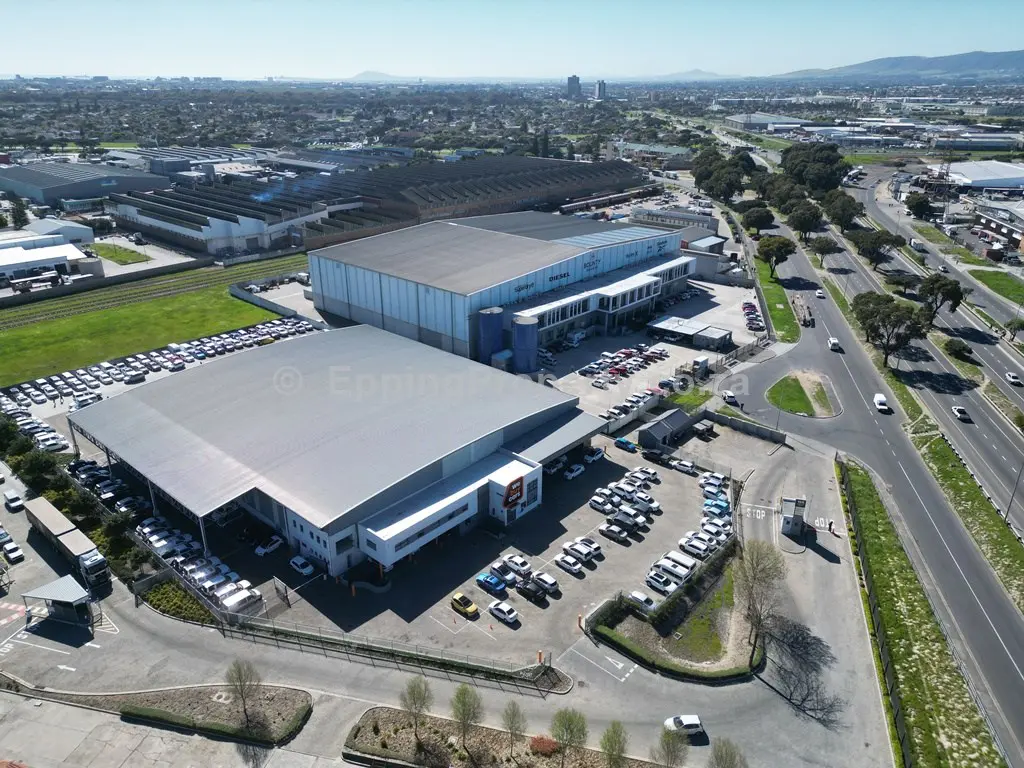
Industrial property may be regarded as any property that is zoned for industrial usage.
- Small to medium-sized factories are often found in complexes.
- Larger warehouses.
- Industrialised business parks.
- Large distribution centres.
- Storage facilities.
- Open land.
Industrial zoning has far broader applications than residential zoning. This affords an industrial property owner various options for use should the need ever arise. Industrially zoned areas are found in most cities and towns. Depending on the city’s age, industrial suburbs may be located in various regions of the city or town.
During the last three years, interest rates have been low, and the Rand has been strong. This has fueled the growth of a diverse range of businesses. Many small businesses have grown out of homes. The most cost-effective step after that is in predominantly industrial property. Larger and more established companies just needed more space. In searching for new premises, most businesses realised it was almost as cost-effective to purchase as to rent. Consequently, many tenants became owners. At the same time, building costs rose significantly. The result was rewarding early purchasers and creating a sense of urgency for those still wanting to buy. Higher construction costs, a shortage of suitable land, and increased demand led to excellent growth in industrial rentals. Further development is anticipated.

1. Directly held (the most widely used method of ownership, as concentrated in this article). Property can be purchased vacant or with the tenant(s).
2. Listed property funds (although most funds are not industrially orientated, the listed sector on the JSE has grown significantly during the last few years). This is a more liquid form of holding property, but it also suffers from stock market fluctuations. Discover the benefits of REITs.
3. Syndications (while joint ownership is fundamentally a good principle, investors are urged to act cautiously. There are good and “not-so-good” syndication companies operating in SA).
How is industrial property different to residential property?
- The location of industrial properties usually has different criteria from residential properties (for example, an industrialist wants to be as close to busy roads as possible; the opposite for residential users)
- Users/tenants of industrial properties evaluate premises as more business-like and unemotional, in line with market rental and square-meter norms.
- Industrial property leases are structured differently from residential leases (usually longer than two years and have fixed escalations each year. Escalations are typically in the 8%-10% per annum compounded range.
- Purchasing industrial property typically requires more extensive research. It takes more time than a residential purchase.
- Financing industrial property is far more complex than financing residential property. It also usually requires a more significant initial capital commitment than residential property.
- A purchaser of industrial property must be well informed about the legal framework, value-added taxes versus transfer duties, accounting, and taxation.
- Industrial property valuation is primarily linked to the net income the property can generate (after all expenses).
- Industrial property yields a far higher income return than residential property, but sometimes offers a lower capital return.
Directly owned property can be purchased using the following methods;
- Tender (usually in the case of government/ state-owned property)
- Auction (no longer is an industrial property sold on auction a forced sale. Auctioning has become a mainstream method of selling. Purchasers should be aware that these sales are cash-only and require immediate access to the full purchase price, plus the agent’s commission and VAT or transfer duty.
- Private Treaty (still the most popular method of sale – handled mainly by brokers specialising in industrial property).
How does one go about finding suitable industrial properties to purchase?
- Determine a broad location where one wants to invest.
- Drive around the area(s) to ensure familiarity with the area and the types of businesses operating there.
- Contact property brokers (more than 2) specialising in the area, sales, and industrial property rentals. Preferably, speak to the best property agents. Discuss with them what they think would suit you and the type of industrial property in the highest tenant demand. Check on the area statistics.
- Have a look at fundamental properties for sale – physically and financially. Ensure they give you enough information upfront.
- Contact a financial institution or bank for advice on your specific circumstances regarding your investment in industrial property.
- Consult with your accountant/ lawyer to ensure that any intended purchase offer is correctly structured to suit your circumstances.
- Evaluate all industrial investment alternatives and select two that one is happy with. This provides a basis for comparison.
- A correctly structured offer should be made to (or “intending to”) negotiate to close the transaction.
- Keep calm and unemotional throughout the entire process, and be prepared to walk away from anything that makes you feel uncomfortable.

Factors and information one should consider when evaluating how to invest in Industrial Property
- Property Purchase Checklist for Industrial Property – incorporates the items below –
- The Site. Location – macro and micro.
- Accessibility and road systems.
- Land and Building Inspection. Also, the age and condition of buildings.
- The flexibility of premises. Specialised facilities are less likely to be rented out if a new tenant must be found.
- Background on the Seller. Who is selling and why?
- Title Deeds, formal legal description, and size of land.
- Municipal valuation and resultant monthly charges.
- Availability of public utilities.
- Town Planning Conditions and Zoning Certificate.
- A copy of the Approved Building Plans.
- Soil and surface conditions.
- Rentable areas.
- Tenants?. If so, tenant mix & description.
- Copies of all current leases. Are the rentals market-related?
- Expense analysis;
- Municipal charges
- Electricity
- Building insurances
- Repairs and Maintenance estimate
- Other expenses
- Month-to-month administration and rent collection
- If the property is sectionalised,
- Latest financial statements of Body Corporate
- Check with the managing agents that all is in order and no special levies are due.
- Copy of Rules of Section Scheme
- Monthly levies of the unit being purchased?
- How are the parking bays owned?
Financing of Industrial Property
Newcomers investing in industrial (and commercial) property should not underestimate the tedious process of arranging finance, if required. We warn you, but don’t let this discourage you! All banks arranging non-residential finance use different in-depth processes to evaluate such loans. The purchaser must submit substantial documentation relating to the buyer, the property, and its tenants. Allow for at least 21 days (at the very quickest) for loan approval. Depending on the bank, a customer may be referred to a non-residential lending division. Always go to more than one bank, even if it is to keep one’s bank honest and competitive.
Standard industrial financing norms
- At least 35% of the pre-VAT purchase price as a capital down payment on the date of transfer. This may vary, depending on the client.
- The lending rate will not be as low as residential loans. A Prime rate of less than 1% is usually a very attractive offer from a bank, but it could be as high as Prime plus 1%.
- Loans are paid off over a ten-year period. (Residential is usually 20 years or more.) The negative cash flow effect results in higher bond repayments. The upside is that you can pay off your bond much faster than with a residential property.
- Read the small print. There may be hidden clauses, such as penalties for selling a property within the first three years or for failing to provide the bank with three months’ notice before a bond can be cancelled.
Liquidity of holding directly owned property
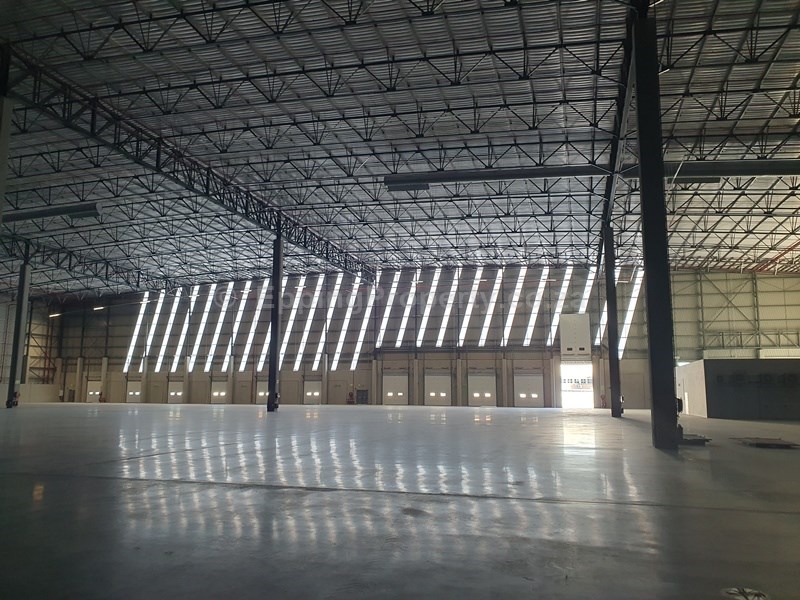
Just as a property purchase takes time to initiate and transfer into one’s name, one must consider the “non-liquid” nature of industrial (and other forms of) property when selling. Notably, one cannot initiate a sale and expect to realise funds quickly. Therefore, do not purchase a property if you may need the funds in the short term. Consider industrial property as a long-term investment of three years or more.
Is the industrial property market likely to remain active in the foreseeable future?
There is no doubt that the current depressed global economy and the strong Rand are having a dampening effect on the industrial sector. Accordingly, tenants are more likely to seek less expensive premises as the squeeze on growth in the SA economy tightens. However, the industrial sector should slow down from its frantic pace over the last three years to a reasonable pace. Furthermore, rental growth is expected to continue outpacing inflation for at least three years. While one needs to keep a close watch on the economy and, consequently, on one’s industrial investments, the outlook for the next three years remains stable at this stage. Invest in Industrial Property for the future!